
I had just come home from work Thursday evening a week ago and had shed my coat and dropped my bags in their usual place when my adolescence came rushing back in one fell swoop.
I popped my head in my wife’s home office to say hello, while holding my iPad. As I looked down and saw the Associated Press alert that Maurice White had died, I mouthed “Oh my God,” and immediately flashed back 40 years to a seat on my neighbor’s basement couch.
That’s the place where my buddies and I congregated pretty much every night, except for when we had dates, which, for me, meant every night. We listened to music, sometimes from a radio, but more often from a tape player or a record player, delivery systems that have largely gone the way of the dinosaur.
Occasionally, some Michael Jackson or Stevie Wonder or Cameo or Commodores would be seep through, but the music of choice, much more often than not, was Earth Wind & Fire.
And why not? We were five black teenagers living in the Washington exurbs and EW&F represented the soundtrack of our lives. And White, the group’s founder, main writer and usual lead singer, was the architect of that soundtrack.
The steady beat of EW&F albums from 1974 to 1980 — in my mind, the apex of their work — kept us going right through high school until we went our separate ways. But White’s artistry left an indelible mark on us so many years after the fact.
The passing of White, who died at the age of 74, couldn’t have come as a surprise to any serious fan, or to anyone who was paying attention. He stopped touring with the group in the mid-1990’s, and it was announced in 2000, the year the group was inducted into the Rock and Roll Hall of Fame, that White had Parkinson’s disease.
I’ve been keeping track of the group since White left. I even bought a couple of their more recent releases. But I haven’t seen them live since Maurice White stopped touring, because, for me, Earth Wind and Fire died then.
Understand that Maurice White was never the singer that Luther Vandross or Peabo Bryson, two of his 1980’s contemporaries, were. For that matter, White wasn’t even the best singer in EW&F. The falsetto of Philip Bailey, who shared the stage with White for the entire run, taking over as lead singer after White got sick, was a more memorable instrument.
Where White excelled was in his musicianship. He wrote or co-wrote the overwhelming majority of the group’s songs, and certainly most of the hits. He took over as lead producer after the 1976 death of Charles Stepney, who co-produced “Open Our Eyes,” “That’s the Way of the World,” “Gratitude” and “Spirit,” the albums that introduced EW&F to the American pop consciousness. And White, who came through the ranks as a drummer, learned and mastered the kalimba, an African thumb piano that dots the group’s early work.
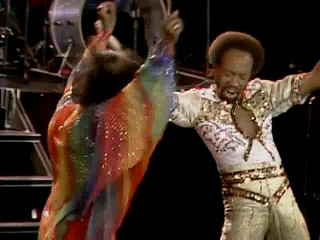
Also, White was a master showman. Their concerts were expertly choreographed and staged with pyrotechnics and gaudy outfits. White himself exuded self assurance and confidence on stage and in videos. Take a look at him preening and strutting here on the video to “Boogie Wonderland.” Mick Jagger could have taken lessons from Maurice White in stage presence.
But unlike some of the groups and artists of their day, EW&F, under White, was about more than having a good time, more than “blue talk and love,” the lyric from “September.” White’s music was all about love, to be sure, but it was about a higher love years before Steve Winwood got there. EW&F sang of a deeper consciousness, about finding the best version of you possible, or letting your feelings show and dealing with the ramifications.
Finally — and this might be the most significant of White’s prodigious gifts — through EW&F, he made black music that kept its soul, its structure, yes, its blackness, without being threatening to whites. This wasn’t Motown, a black sound tailored to be accessible to white audiences. Nor was it hard core funk that didn’t have the kind of crossover appeal that could crack a Billboard Top 40.
No, what White made was music that everyone could find a piece of. One of my best friends in high school was a hard core Beatles fan who worshiped at the altar of John, Paul, George and Ringo. Yet, from the first moment I played EW&F’s cover of “Got to Get You Into My Life,” from the soundtrack of the ill-fated “Sgt. Pepper” movie, my buddy had to admit that their version, with that amazing horn line open, Verdine White’s infectious bass line and Al McKay’s furious guitar solo, was the superior one.
Speaking of bad movies, EW&F’s breakthrough hit, the brilliant “That’s the Way of the World,” was the soundtrack to a simply awful movie, starring the group as “The Group” and Harvey Keitel as their manager. I got the chance to interview White in 1988, as the reconstituted group was touring again after a five-year hiatus. We chatted about the breadth of their work and I finally had to get around to asking about “That’s the Way of the World.”
When I told him that I had always been surprised to see that the album was a soundtrack, since I had never seen the movie, White laughed and said no one had.
There’s no way you could boil a career like Maurice White’s down to a few songs, but here’s a very short list of the essential tunes of his life:
- “That’s the Way of the World” — The title track of the af0rementioned soundtrack is as brilliant as any piece of American pop music, made more so by White’s haunting vocal. On tour, White would always call this the group’s national anthem. Amen!
- “Can’t Hide Love” — White took what had been a minor hit for Creative Source and turned it into a classic, adding a chant at the end. This was the group’s first collaboration with criminally unheralded songwriter Skip Scarborough.
- “All About Love” — A ballad from “That’s the Way of the World,” the most memorable portion is White pausing to rap to the audience, 70’s style. Coming from virtually anyone else, White’s line “If there ain’t no beauty, you got to make some beauty” would sound trite and cliched, but his earnest approach makes it soar.
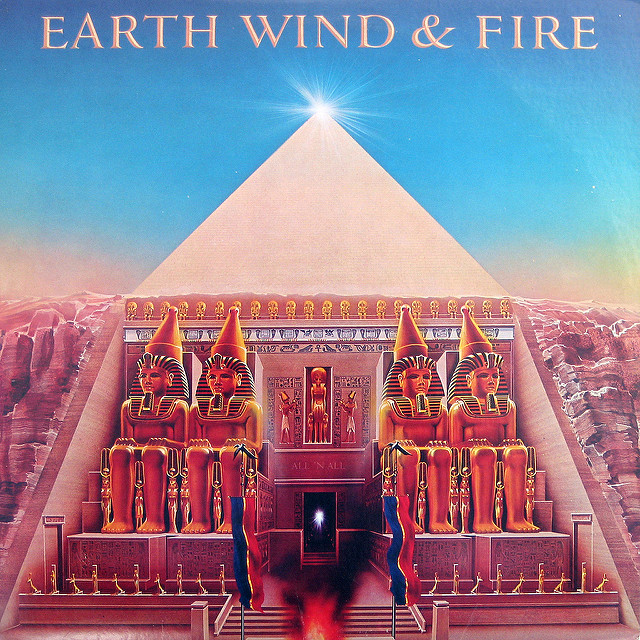
- “Be Ever Wonderful” — Another ballad, this closes the “All in All” album with White’s admonition to “be ever wonderful in your own sweet way,” as well as the plea: “Don’t let the world/Change your mind.”
- “Love’s Holiday” — Another collaboration with Scarborough, this finds White as crooner, asking his lover “Would you mind/If I touched, if I kissed, if I held you tight/In the morning light.”
- “Saturday Night” — On this minor hit from the “Spirit” album, White spoofs the disco and party scene of the mid-70’s. “Saturday Night” puts the group’s playful side on display, with a raucous close of band members at a bash and what sounds like White saying, “I might as well get down with the rest of ’em.” Indeed.
- “Open Our Eyes” — Though a belief in the Almighty was inherent in their music, it’s in this title cut from their 1974 album that White and EW&F fully embrace their religious side in this cover of a gospel song. White implores God to “smile down on Your helpless children” in a soulful rendition.
.
 sports@large blog